Electricity demand in Skellefteå is expected to grow as businesses with high electricity requirements set up here. At the same time, industry in Västerbotten and Norrbotten continues to grow and become more electrified. To keep electricity prices down and enable continued growth, more fossil-free electricity is needed, produced close to where it is used. Local electricity generation means that access to electricity is improved and businesses need to worry less about bottlenecks and transmission capacity in the electricity grid. This creates security and predictability for businesses.
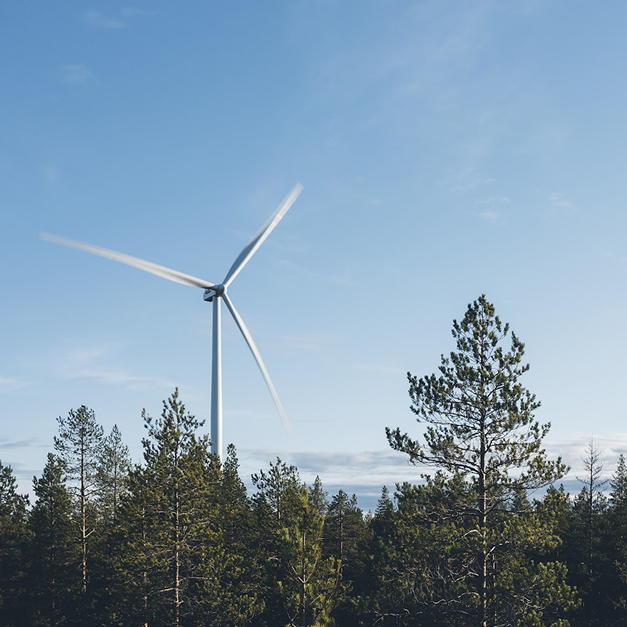
The Fjällboheden wind farm is already part of the solution – if it is expanded into an energy park, it can contribute even more to the development of Jörn and Skellefteå and to Sweden’s overall energy transition. Fu-Gen is currently investigating the possibility of expanding Fjällboheden into an energy park with up to nine additional wind turbines and battery storage to smooth out peaks and troughs in the electricity supply. New and more efficient wind turbines will add around 72 MW of installed capacity and increase the park’s electricity production so that it can supply around 10,500 additional detached houses with domestic electricity each year.
The expanded wind farm can make use of existing roads, power lines and transformer stations, thereby minimising the impact on the natural environment and the land.
The expansion is planned for a site approximately 8 kilometres south-east of Jörn in Skellefteå Municipality, adjacent to the existing Fjällboheden wind farm.
Fu-Gen stands for ‘Future Generation’ and is a privately owned energy company that develops, builds and owns renewable energy generation and battery storage facilities in the Nordic region. Sweden is our main market and we invest across the entire value chain, from project planning and development to construction and long-term ownership. Our vision is to create sustainable energy solutions for future generations, starting today.
We are a committed company that thrives through dialogue and collaboration with the people, businesses and organisations affected by our projects. It is important to us that our developments contribute to local development, create jobs and deliver long-term benefits in the areas where we operate. In Sweden, Fu-Gen currently owns four wind farms in the municipalities of Tanum, Strömsund, Skellefteå and Ljusdal.
In addition to the business sector benefiting from increased access to stable and renewable electricity generation, the local authority, the local community and local residents will also receive financial compensation. Approximately 3 million kronor per year will be channelled into the local community through community development funds, property tax paid to the local authority and compensation paid to local residents. Local contractors are already being engaged for operation and maintenance at Fjällboheden, and further jobs would be created during the construction and operation of the proposed energy park.
The Fjällboheden Community Association is the recipient of the local development funds generated by the existing wind farm. The association can, for example, contribute to projects relating to infrastructure and public benefit, the natural and cultural environment, and tourism, in order to strengthen the local area’s development in both the short and long term.
When a wind farm is developed, more community funds will be made available for local development projects. Fu-Gen allocates 100,000 SEK per wind turbine for the Fjällboheden Energy Park every two years to one or more community organisations working to develop the local area.

Illustration created using AI to show what an energy park might look like; the image is for illustrative purposes only.
The purpose of the consultation is to provide information about the planned activities and to offer the opportunity to contribute information and suggestions via consultation responses. All feedback helps to shape the project so that we can adapt it and ensure the environmental impact assessment contains the appropriate information. We would very much like to hear about your local knowledge, your questions and your views so that the environmental impact assessment can be tailored to your needs. Further down the page, you will find all the documentation for the project.
Here you will find the consultation document for Energipark Fjällboheden 2.
We would like to receive your consultation responses by 31 October 2026 at the latest so that we can consider them as early as possible in the process. Please submit your comments in one of the following ways:
We are hosting an open day and public consultation on the planned energy park. During the consultation, there will be an exhibition featuring, amongst other things, maps, information about the project and visualisations showing what the development might look like from various locations in the area. Representatives from the project will be on hand to explain the plans, answer questions and listen to your views.
We will not be holding a joint presentation; instead, we would like to provide an opportunity for discussion based on the questions and concerns you, as a visitor, may have.
When? 8 October, 2.00 pm – 8.00 pm
Where? At Lantliv Lodge, Österjörn 13
We’ll be serving a sandwich cake, coffee and light refreshments. No booking required.
Fu-Gen considers an expansion of the area to be of interest.
Fu-Gen is stepping up its efforts to investigate the possibility of expanding energy production.
Fu-Gen is continuing to investigate the possibility of expanding the wind farm into an energy park by carrying out further environmental surveys.
Fu-Gen is investigating the possibility of expanding the Fjällboheden project to include up to nine new wind turbines and battery storage through a scoping consultation, by inviting the public to take part in the scoping consultation.
Fu-Gen plans to compile the project’s consultation report and environmental impact assessment into a single application to the Environmental Assessment Committee at the Västerbotten County Administrative Board.
Consideration of the application.
Detailed design of roads, construction and commissioning
The demand for electricity from industry in Västerbotten and Norrbotten is growing, whilst transport is being electrified at an ever-increasing rate. To keep electricity prices down and enable continued growth, more fossil-free electricity is needed, produced close to where it is consumed. Local electricity generation means that access to electricity is improved and businesses need to worry less about bottlenecks and transmission capacity in the electricity grid.
The mountain wind farm is already part of the solution; if expanded, it can contribute even more to the development of Jörn and Skellefteå and to Sweden’s overall energy transition. Should expansion take place, existing roads, power lines and transformer stations can be utilised, thereby minimising the impact on nature and the land.
Electricity demand in Skellefteå is expected to grow as businesses that are already here, or wish to relocate here, establish themselves in the area. In addition to local initiatives, industrial electricity demand in Västerbotten and Norrbotten is expected to rise sharply in the coming years, driven, for example, by Stegras and SSAB’s steel production in Boden and Luleå.
We are investigating the possibility of building a maximum of nine additional turbines, as well as battery storage to store the electricity generated by the wind farm.
The existing wind farm has turbines with a total height of 200 m. Energipark Fjällboheden 2 is applying for a maximum of 9 wind turbines with a maximum total height of 290 m. Technological development has progressed rapidly over the last 10–15 years. Taller, fewer turbines capture more consistent wind, and the turbines generate more electricity with fewer foundations, a shorter road network and less overall impact on the environment. Once built, the wind farm could generate significantly more electricity, and because the new turbines are so efficient, they require less land than the existing wind farm.
Anything that moves generates sound. The rotor blades of wind turbines emit a soft whooshing sound caused by the blades moving through the air. To obtain an environmental permit, the noise level from wind turbines must not exceed 40 dBA outdoors near residential properties. By way of comparison, the guideline value for traffic noise at an outdoor seating area is 50 dBA and at a residential facade 55 dBA.
Infrasound from wind turbines is very faint and lies well below the threshold of human perception. There is extensive research into infrasound and its impact on human health, and Swedish authorities base their decisions on the current body of knowledge in this field.
In total, this amounts to approximately 3 million per year in local revenue if the new energy park is built. Property tax (if the government decides to make the arrangement permanent) will be 160,000 SEK per plant, or 1.5 million SEK per year in total. Compensation for local residents: 560,000 SEK per year and community funds: 900,000 SEK per year, or 100,000 SEK per plant.
For the Fjällboheden 2 wind farm, Fu-Gen is allocating community funds of SEK 100,000 per turbine. A joint community fund agreement will be signed with the recipients of the community funds; such an agreement may be signed, for example, when the wind farm receives its environmental permit.
There is currently a community fund for the existing Fjällboheden wind farm, known as the Fjällboda Interest Association. It is a local association that has a community fund agreement with Fu-Gen. The association works to ensure that money from the wind farm benefits the local community. The association held its first inaugural meeting in 2026, which means that the community funds can now be disbursed. The fund is replenished annually, and grants can be applied for to support local development projects in areas such as infrastructure and public benefit, employment, the natural and cultural environment, or tourism. There are also plans to invest in the expansion of broadband infrastructure in the area.
The association’s main task is to manage the Wind Power Fund and allocate funds to initiatives that contribute to development in Österjörn, Dalliden, Stavaträsk, Nyträsk, Gråliden/Fjällboda and the surrounding areas.
Within a few weeks, the community fund association will have a website with further information and the option to apply for funding. The website is currently under construction and will be accessible via this link: www.fjallbohedenintresseforening.se/
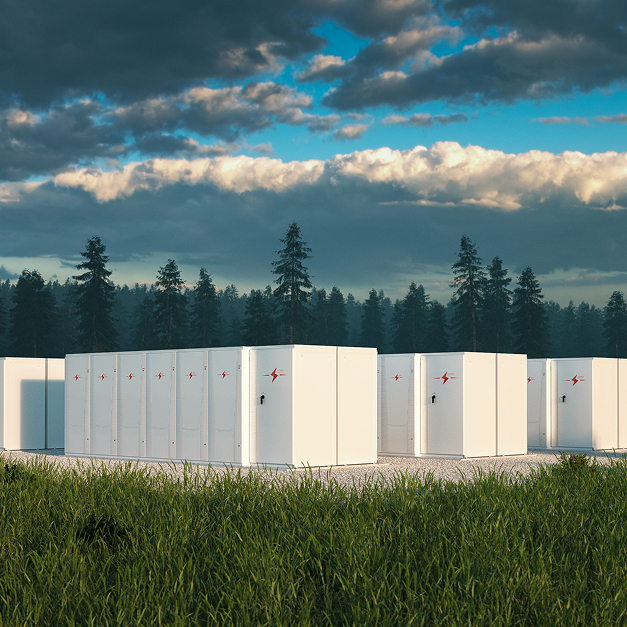
This has not yet been decided, but the storage capacity will be determined at a later stage of the project. The battery stores electricity when there is ample generation and feeds it back into the grid when demand exceeds supply. The battery helps to stabilise the electricity system and make more renewable energy available when it is needed most.
We currently have no plans for further development beyond the area covered by the consultation for Energipark Fjällboheden 2. Any future changes or new projects would, in that case, require local support, further investigations and a new licensing process.



Are you interested in developing energy projects on your land? Or do you have ideas on how we can contribute to local development together?
You’re warmly welcome to get in touch with Robin Lindström, Land Manager: r.lindstrom@fu-gen.com